Swallowing disorders affect around 10% of the general population and have a variety of causes. Neurological diseases such as stroke (apoplexy) or Parkinson's disease dominate. Swallowing disorders can also be caused by malignant tumours in the mouth and throat area, which require clarification by an ENT specialist. In some cases, they are also the result of tumour therapy such as surgery, chemotherapy or radiotherapy for malignant tumours in the head and neck area. A common cause is age-related dysphagia.
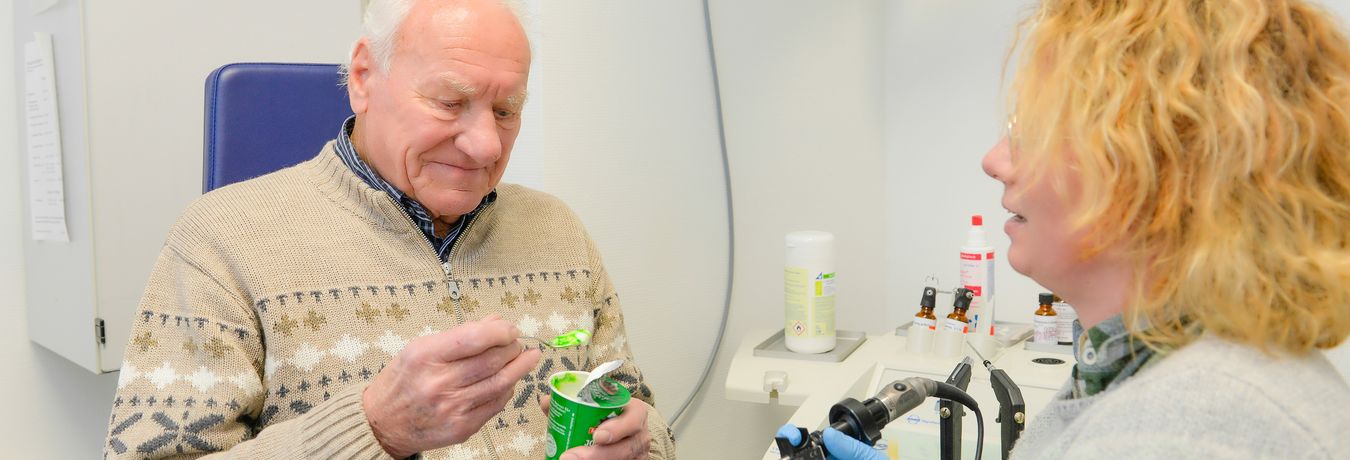
As part of specialist swallowing diagnostics, an examination of swallowing and the oral cavity is carried out on an awake patient via the oral cavity or nasopharynx using an endoscope. Swallowing is then carried out with coloured water, yoghurt and a slice of bread under endoscopic control. Abnormalities of abnormal swallowing in the mouth or gullet area, such as the bite getting stuck, sliding into the larynx and entering the lungs (so-called aspiration) can thus be diagnosed. Once these abnormalities are known, it can be determined whether it is still safe to feed the patient by mouth or whether nutrition must be given via a feeding tube (PEG), for example. The type of food (e.g. soft food only) can also be determined. If additional swallowing therapy needs to be initiated by a speech therapist, specific therapy recommendations can be made based on the results of the swallowing examination. Therapy monitoring also takes place in our swallowing consultation.