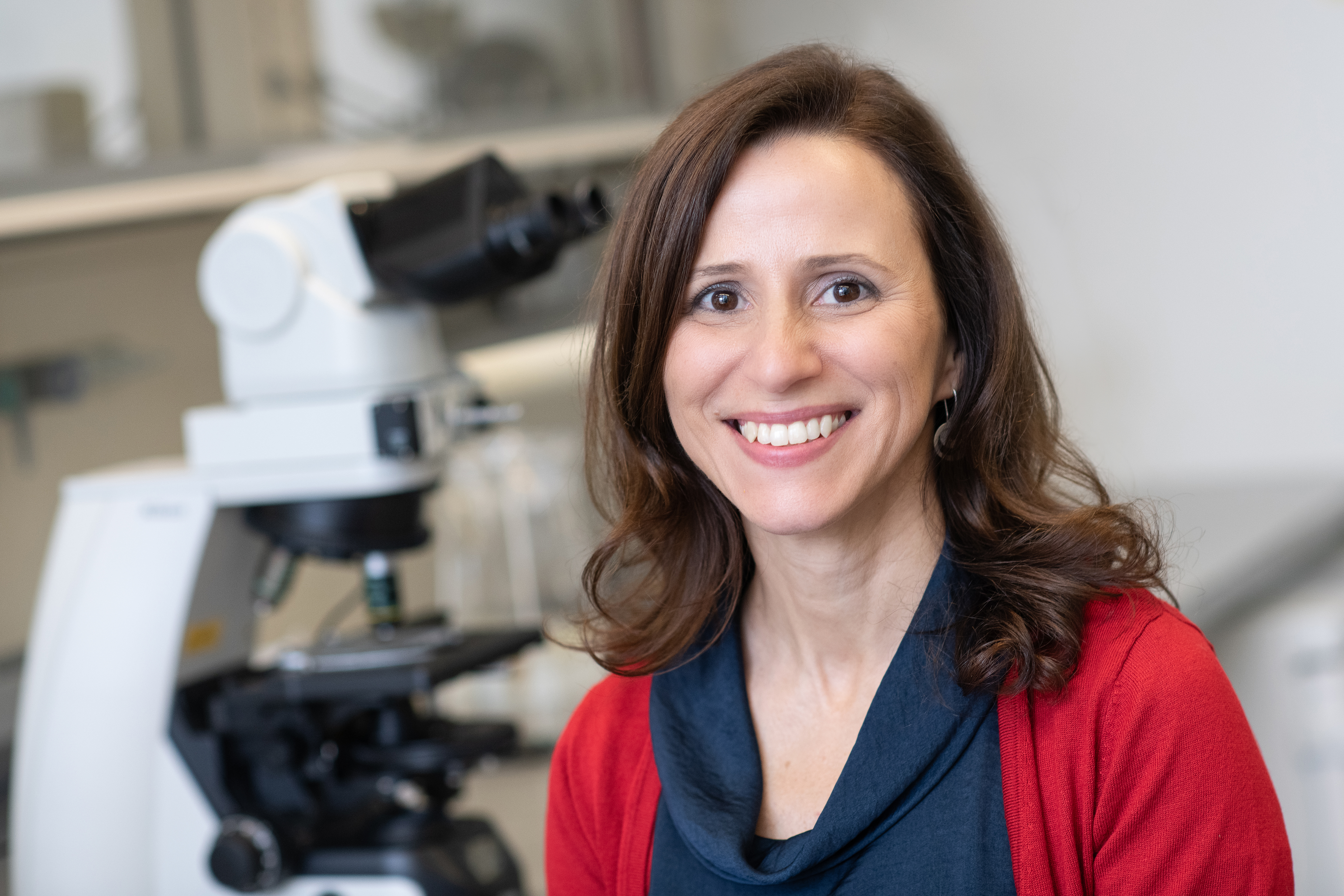
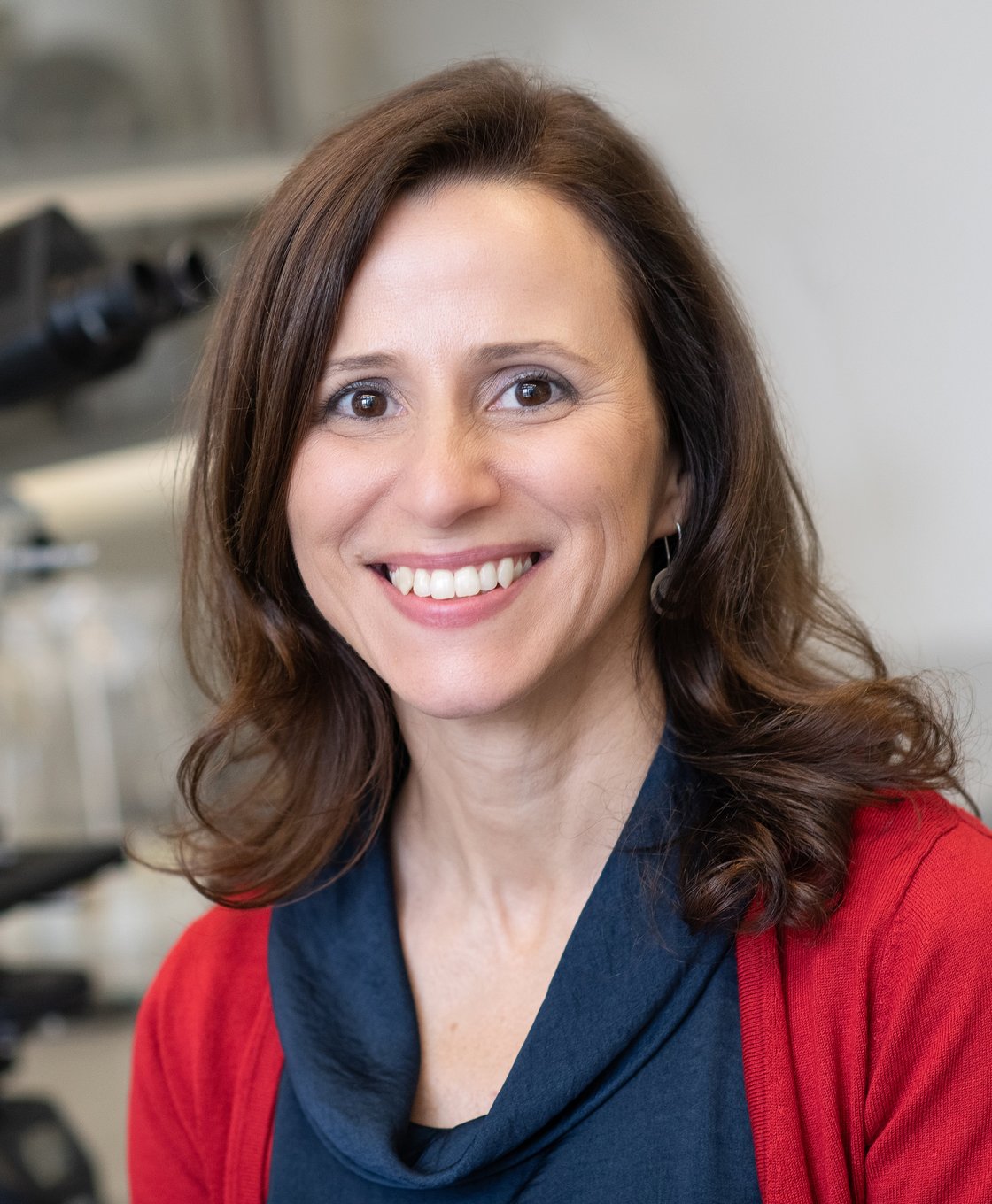
Vera Martins joined the Institute of Immunology in 2025 to start the new Cellular Immunology Lab.
Research
Research in the Cellular Immunology Laboratory at the University of Ulm focuses on T lymphocyte development under physiological conditions and in leukemia. T cell development occurs primarily in the thymus, where bone marrow-derived progenitors undergo differentiation in a highly dynamic process characterized by continuous cellular turnover.
Our work has shown that thymic turnover is actively regulated by cell competition. Specifically, newly arriving, young, hematopoietic precursors replace old thymocytes that have resided longer in the thymus, ensuring tissue renewal and functional integrity. This process is non-cell autonomous: it is the presence of young cells that drives the elimination of older ones.
When thymus seeding is impaired and cell competition is hindered, older thymocytes persist, acquire self-renewal capacity, and temporarily sustain T cell production, a state we termed thymus autonomy. However, prolonged thymus autonomy has a critical consequence: it promotes the development of aggressive T cell acute lymphoblastic leukemia (T-ALL).
Our research aims to uncover the cellular and molecular mechanisms that govern normal thymic homeostasis, with a (non-exclusive) focus on cell competition, and to define how its disruption leads to malignant transformation of T cell precursors.
Education and Teaching
Vera Martins teaches Immunology Allergology and Immunopathology in the 5th semester of the Molecular Medicine Bachelor (lectures, seminars and one practical course).
Our team is happy to integrate students who would like to do their BSc/MSc thesis in our lab. Informal inquiries about possibilities for PhD or Postdoctoral training are also welcome.
If you are interested in knowing more about our work, send your inquiries to vera-1.martins@uni-ulm.de.
The Team
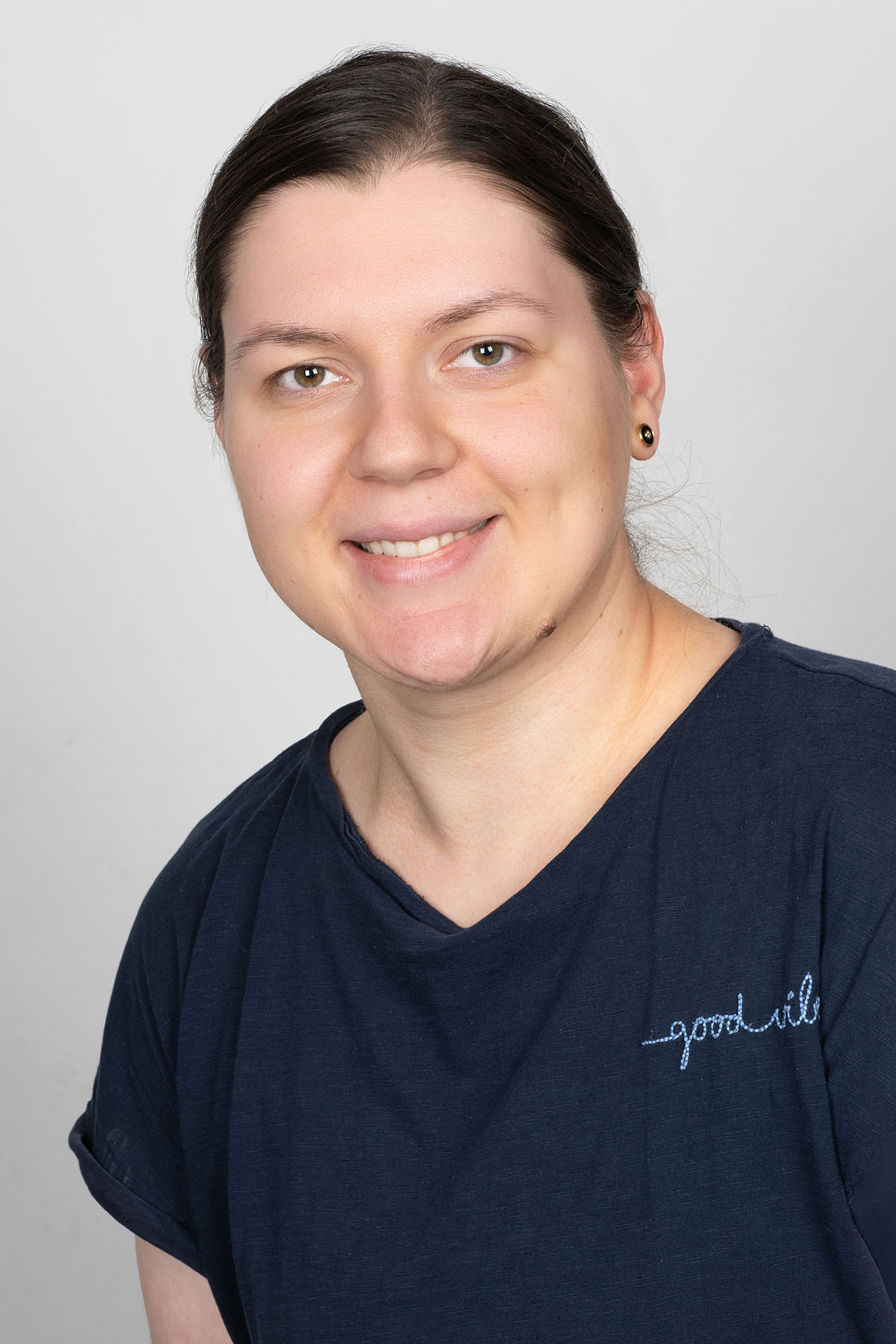
Daria Sharko
PhD Student
Tel.: +49 (0)731 500 65212
If a paper is behind a paywall, please ask me: vera-1.martins@uni-ulm.de
1. Wu Q, Carlos AR, Braza F, Bergman ML, Kitoko JZ, Bastos-Amador P, et al. Ferritin heavy chain supports stability and function of the regulatory T cell lineage. EMBO J. 2024;43(8):1445–83. https://doi.org/10.1038/s44318-024-00064-x
2. Paiva RA, Ramos CV, Leiria G, Martins VC. IL-7 Receptor Drives Early T Lineage Progenitor Expansion. J Immunol. 2022;209(10):1942–9. https://doi.org/10.4049/jimmunol.2101046
3. Ramos CV, Martins VC. Cell competition in hematopoietic cells: Quality control in homeostasis and its role in leukemia. Dev Biol. 2021;475:1–9. https://doi.org/10.1016/j.ydbio.2021.02.013
4. Paiva RS, Ramos CV, Azenha SR, Alves C, Basto AP, Graca L, et al. Peptidylprolyl isomerase C (Ppic) regulates invariant Natural Killer T cell (iNKT) differentiation in mice. Eur J Immunol. 2021;51(8):1968–79. https://doi.org/10.1002/eji.202048924
5. Paiva RA, Sousa AGG, Ramos CV, Avila M, Lilue J, Paixao T, et al. Self-renewal of double-negative 3 early thymocytes enables thymus autonomy but compromises the beta-selection checkpoint. Cell reports. 2021;35(2):108967. https://doi.org/10.1016/j.celrep.2021.108967
6. Ramos CV, Ballesteros-Arias L, Silva JG, Paiva RA, Nogueira MF, Carneiro J, et al. Cell Competition, the Kinetics of Thymopoiesis, and Thymus Cellularity Are Regulated by Double-Negative 2 to 3 Early Thymocytes. Cell reports. 2020;32(3):107910. https://doi.org/10.1016/j.celrep.2020.107910
7. Alves NL, Carvalho A, Serre K, Martins VC, Saraiva M. The Portuguese Society for Immunology (SPI): history and mission. Eur J Immunol. 2020;50(7):918–20. https://doi.org/10.1002/eji.202070075
8. Ballesteros-Arias L, Silva JG, Paiva RA, Carbonetto B, Faisca P, Martins VC. T Cell Acute Lymphoblastic Leukemia as a Consequence of Thymus Autonomy. J Immunol. 2019;202(4):1137–44. https://doi.org/10.4049/jimmunol.1801373
9. Paiva RA, Ramos CV, Martins VC. Thymus autonomy as a prelude to leukemia. FEBS J. 2018;285(24):4565–74. https://doi.org/10.1111/febs.14651
10. Krowiorz K, Ruschmann J, Lai C, Ngom M, Maetzig T, Martins V, et al. MiR-139-5p is a potent tumor suppressor in adult acute myeloid leukemia. Blood Cancer J. 2016;6(12):e508. https://doi.org/10.1038/bcj.2016.110
11. Rode I, Martins VC, Kublbeck G, Maltry N, Tessmer C, Rodewald HR. Foxn1 Protein Expression in the Developing, Aging, and Regenerating Thymus. J Immunol. 2015;195(12):5678–87. https://doi.org/10.4049/jimmunol.1502010
12. Martins VC, Busch K, Juraeva D, Blum C, Ludwig C, Rasche V, et al. Cell competition is a tumour suppressor mechanism in the thymus. Nature. 2014;509(7501):465–70. https://doi.org/10.1038/nature13317
13. Luche H, Nageswara Rao T, Kumar S, Tasdogan A, Beckel F, Blum C, et al. In vivo fate mapping identifies pre-TCRalpha expression as an intra- and extrathymic, but not prethymic, marker of T lymphopoiesis. J Exp Med. 2013;210(4):699–714. https://doi.org/10.1084/jem.20122609
14. Martins VC, Ruggiero E, Schlenner SM, Madan V, Schmidt M, Fink PJ, et al. Thymus-autonomous T cell development in the absence of progenitor import. J Exp Med. 2012;209(8):1409–17. https://doi.org/10.1084/jem.20120846
15. Martins VC, Boehm T, Bleul CC. Ltbetar signaling does not regulate Aire-dependent transcripts in medullary thymic epithelial cells. J Immunol. 2008;181(1):400–7. https://doi.org/10.4049/jimmunol.181.1.400
16. Benz C, Martins VC, Radtke F, Bleul CC. The stream of precursors that colonizes the thymus proceeds selectively through the early T lineage precursor stage of T cell development. J Exp Med. 2008;205(5):1187–99. https://doi.org/10.1084/jem.20072168
17. Heinzel K, Benz C, Martins VC, Haidl ID, Bleul CC. Bone marrow-derived hemopoietic precursors commit to the T cell lineage only after arrival in the thymic microenvironment. J Immunol. 2007;178(2):858–68. https://doi.org/10.4049/jimmunol.178.2.85