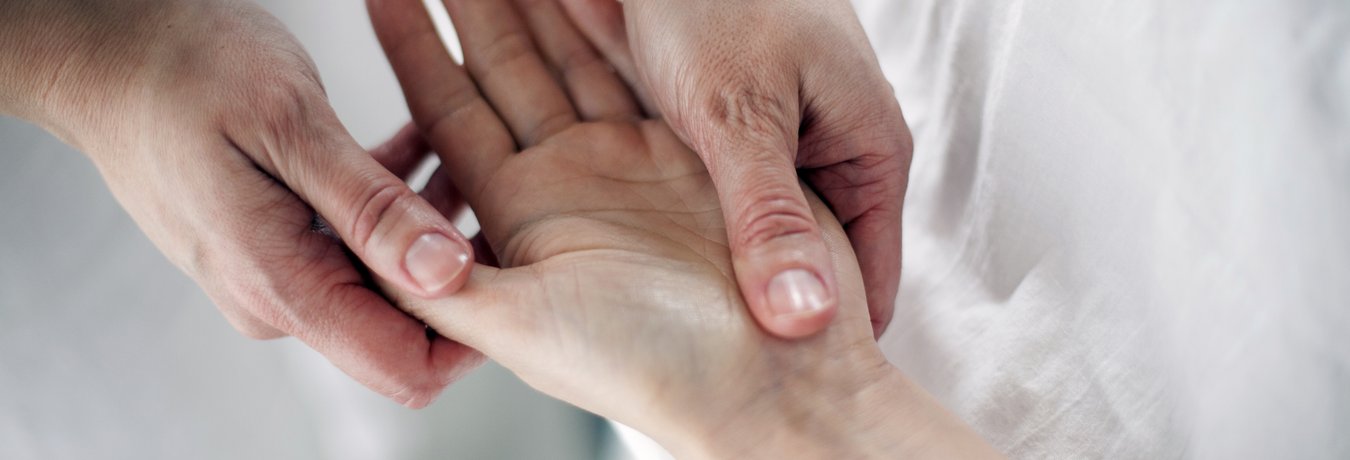
What does the implementation of integrative nursing at the UKU offer?
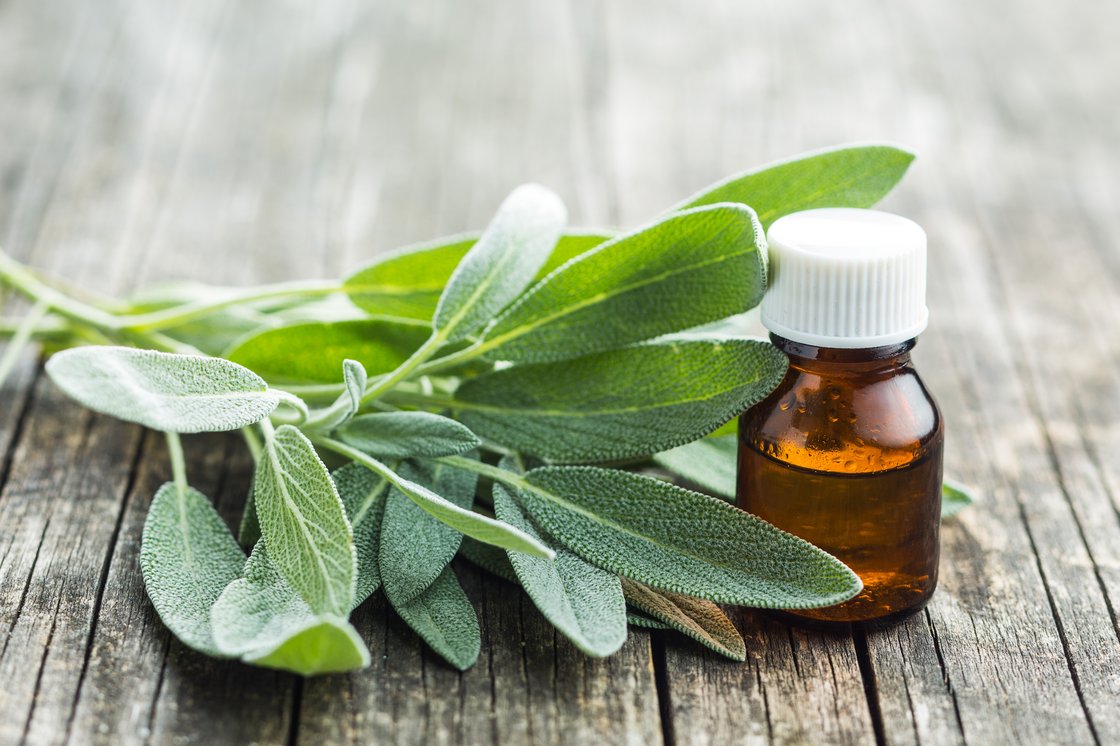
Since 2021, integrative nursing interventions for inpatients with an oncological focus have been offered across than ten wards at Ulm University Hospital through a nursing-led consultation service.
In this project, integrative nursing interventions are defined to be external, naturopathic applications of medical and health care, such as
- compresses,
- wraps,
- embrocations,
- therapeutic washes and baths
- aromatherapy
- acupressure
Integrative nursing interventions are performed by registered nurses who have received training in the field of integrative nursing. The integrative nursing service can be requested on a consultation basis by nursing or medical ward staff.
In two sequential studies as part of the accompanying scientific research, the implementation of the integrative nursing was evaluated and examined in terms of acceptance, feasibility, implementation conditions, perceptions and experiences from various perspectives. The views of patients receiving integrative nursing care, their relatives and employees at the UKU are included.
Raiber L, Stock-Schröer B, Kramer K.
Implementing integrative nursing for oncology inpatients: a retrospective analysis of project-related routine data from 2021 to 2023. Support Care Cancer. 2026;34(5):441.
doi: 10.1007/s00520-026-10666-2.Raiber L, Stock-Schröer B, Thiele J, Kramer K.
Implementation of Integrative Nursing for Patients With Cancer Receiving Inpatient Care: Protocol for a Convergent Parallel Mixed Methods Evaluation. JMIR Res Protoc. 2025;14:e74405.
doi:10.2196/74405Mohr L+, Raiber L+, Thiele J, Kramer K.
Personal Use and Attitude toward Integrative Medicine and Nursing among Employees at a German University Hospital: Results of a Cross-Sectional Study. Complement Med Res. 2025;1–11.
doi:10.1159/000548783.Raiber L, Raff C, Thiele J, Kramer K.
Integrative Nursing Interventions for Cancer-Related Symptoms in Oncology Inpatients: Results of a Descriptive Pilot Study. Integr Cancer Ther. 2024;23:1–9.
doi:10.1177/15347354241239930.