Translational and Experimental Research in Trauma Surgery
Severe trauma triggers a complex systemic response involving the immune, vascular, metabolic and coagulation systems. These responses are crucial for limiting tissue damage and initiating repair processes. However, if this regulation becomes unbalanced, it can lead to a persistent inflammatory response, dysregulation of the immune system, infections, organ failure and sepsis. Understanding why patients develop different clinical courses following comparable injuries is therefore a key challenge in modern trauma medicine.
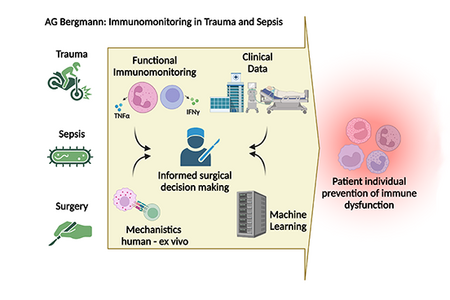
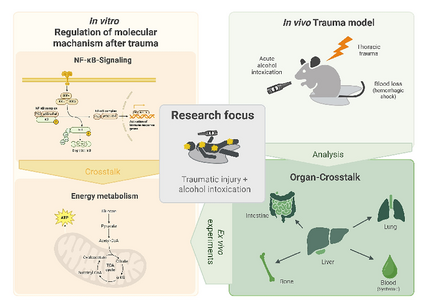
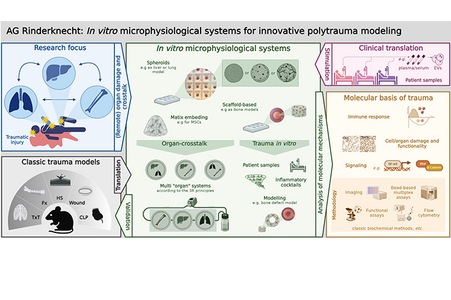
Our research focuses on the molecular and cellular mechanisms that determine the response to severe trauma. In particular, we focus on immune regulation, inflammatory processes and communication between different organs. We investigate how innate and adaptive immune responses interact with tissue damage and systemic factors, thereby influencing the subsequent course of the condition – from recovery to the development of serious complications. By combining clinical studies with experimental models and modern molecular biological analyses, we aim to identify biomarkers, underlying mechanisms and therapeutic targets that will enable earlier risk assessment and more personalised treatment.
From the laboratory to patients – and back again
A key principle of our work is bidirectional translational research. The close integration of the Chair of Translational and Experimental Research in Trauma Surgery within the Department of Trauma, Hand, Plastic and Reconstructive Surgery enables us to investigate clinically relevant questions experimentally and to translate scientific findings into clinically relevant approaches.
Our research is embedded within a strong interdisciplinary network at the University of Ulm and beyond. As part of the Collaborative Research Centre (SFB) 1149, we investigate the molecular, cellular and systemic mechanisms of the response to severe trauma and their significance for regeneration and disease progression. As part of the DFG Research Group FOR 5417, we are investigating systemic mechanisms following trauma, including communication between organs and the role of extracellular vesicles, with the aim of developing improved diagnostic and therapeutic strategies. Our involvement in BioFACTORy, a Horizon Europe project, extends this research profile into the fields of regenerative medicine and the development of scalable, AI-supported approaches for advanced cell-based therapies.
These collaborations bring together trauma immunology, systems biology, translational medicine and regenerative medicine. The shared aim is to translate mechanistic insights into improved diagnostic procedures, personalised therapies and, ultimately, better treatment outcomes for seriously injured patients.
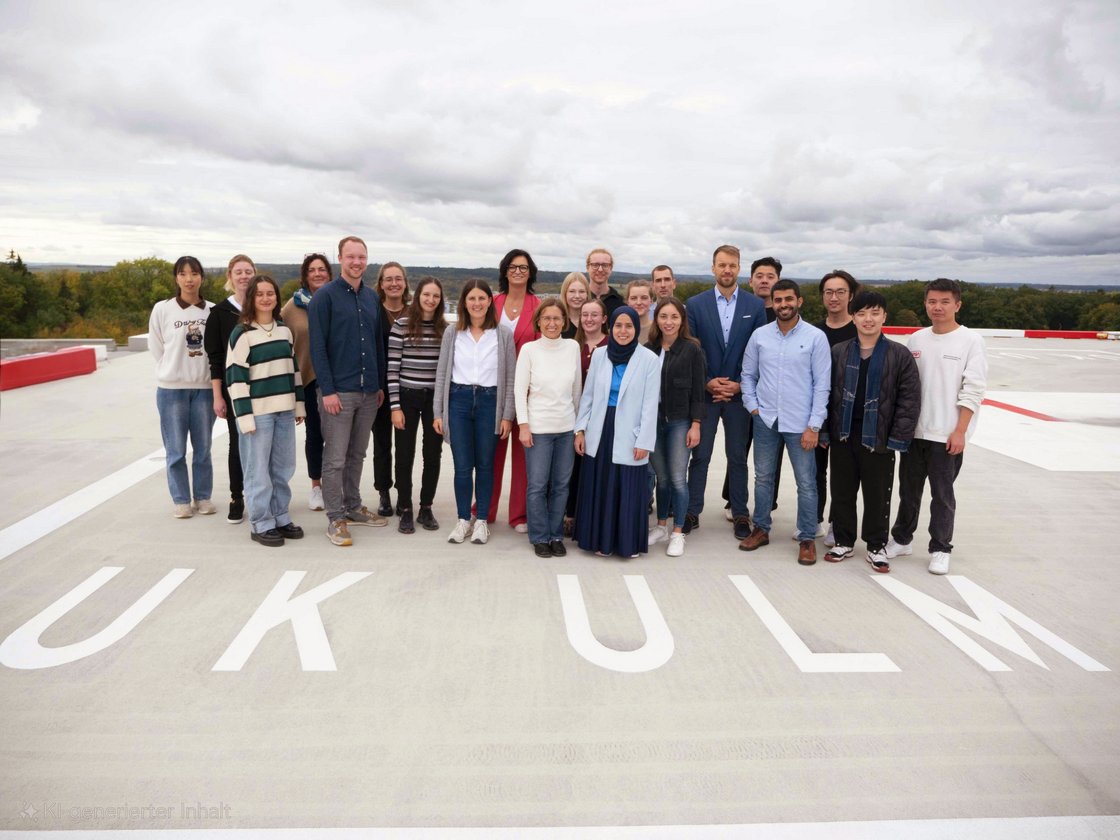
Management
FOR5417/1
Translational Polytrauma Research to Provide Diagnostic and Therapeutic Tools for Improving Outcomes
www.dfg-for5417.de
Arbeitsgruppenleiter*innen
Postdocs
Medical doctoral students
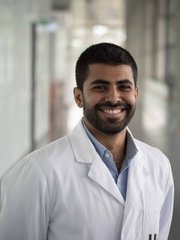
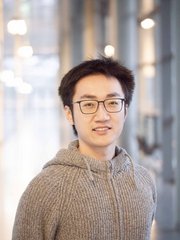
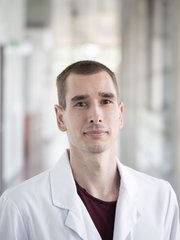
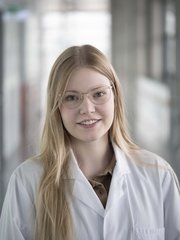
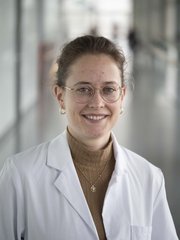
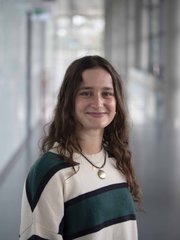
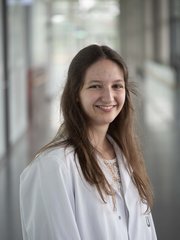
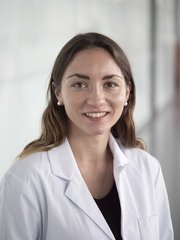
Technical employees
ehemalige Mitarbeitende
Chahinaz Rawas
TA
New job advertisements
Medical doctoral students wanted
- Dynamic immune monitoring in diabetic patients with diabetic foot infection
- Dynamic immune monitoring and interaction of adaptive innate immune system in polytrauma
Research assistants wanted
- for data entry for a
research project in the field of dysregulation of the immune system after severe trauma
Here you can find more information
Applications with CV and letter of motivation can be sent by email to the following address:
borna.relja@uniklinik-ulm.de,christian.bergmann@uniklinik-ulm.de
Translational and Experimental Trauma Research
Severe trauma triggers a complex systemic response involving the immune, vascular, metabolic, and coagulation systems. While these responses are essential for limiting injury and initiating repair, their dysregulation can contribute to persistent inflammation, immune dysfunction, infection, organ failure, and sepsis. Understanding why patients follow different trajectories after apparently similar injuries is therefore a central challenge in modern trauma medicine.
Our research focuses on the molecular and cellular mechanisms that govern the response to severe trauma, with particular emphasis on immune dysregulation, inflammation, coagulation, and organ crosstalk. We investigate how innate and adaptive immune responses interact with tissue injury and systemic factors to determine recovery or the development of complications. By combining clinical studies with experimental models and advanced molecular analyses, we aim to identify biomarkers, mechanisms, and therapeutic targets that can support earlier risk assessment and more individualized treatment.
From the laboratory to the patient — and back
A central principle of our work is bidirectional translational research. The close integration of Translational and Experimental Trauma Research within the Department of Trauma, Hand, Plastic and Reconstructive Surgery enables clinically relevant questions to be investigated experimentally and scientific discoveries to be translated into clinically meaningful approaches.
Our research is embedded in a strong interdisciplinary network at Ulm University and beyond. Within the Collaborative Research Centre SFB 1149, we investigate the molecular, cellular, and systemic mechanisms underlying the response to severe trauma and their implications for recovery and regeneration. As part of the DFG Research Unit FOR 5417, we study systemic post-traumatic mechanisms, including organ crosstalk and extracellular vesicles, with the aim of developing improved diagnostic and therapeutic strategies. Our work in BioFACTORy, a Horizon Europe project, further connects our research with regenerative medicine and the development of scalable, AI-supported approaches for advanced cell-based therapies.
Together, these collaborations connect trauma immunology, systems biology, translational medicine, and regenerative medicine, with the common goal of translating mechanistic insights into improved diagnostics, individualized therapies, and better outcomes for patients with severe injury.