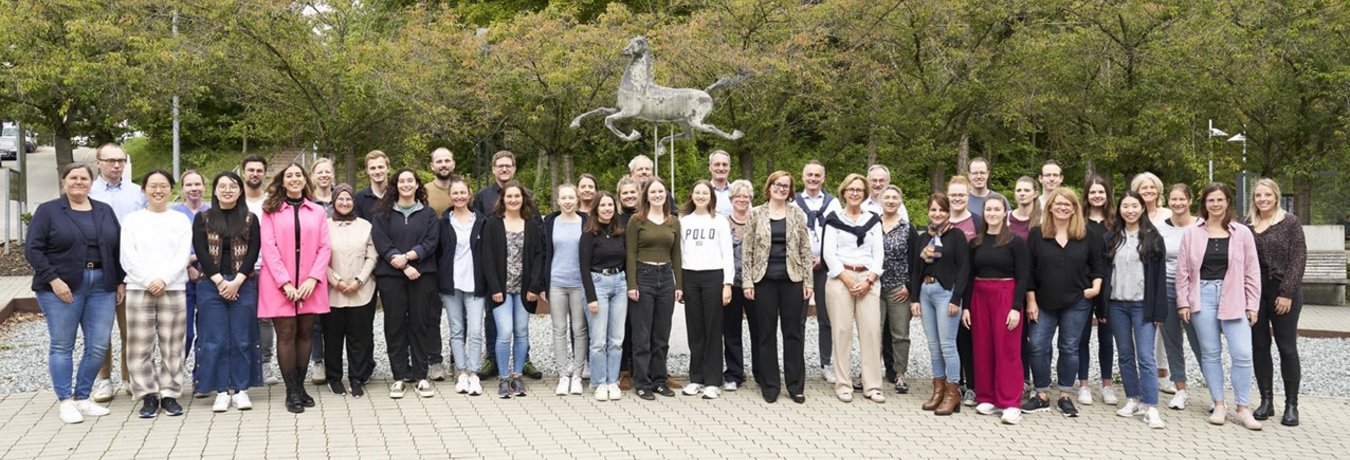
Head

PD Dr Marcin Lyszkiewicz
Ulm University Medical Center
Department of Pediatrics and Adolescent Medicine
Eythstr. 24 (Research Lab, House 16)
89075 Ulm, Germany
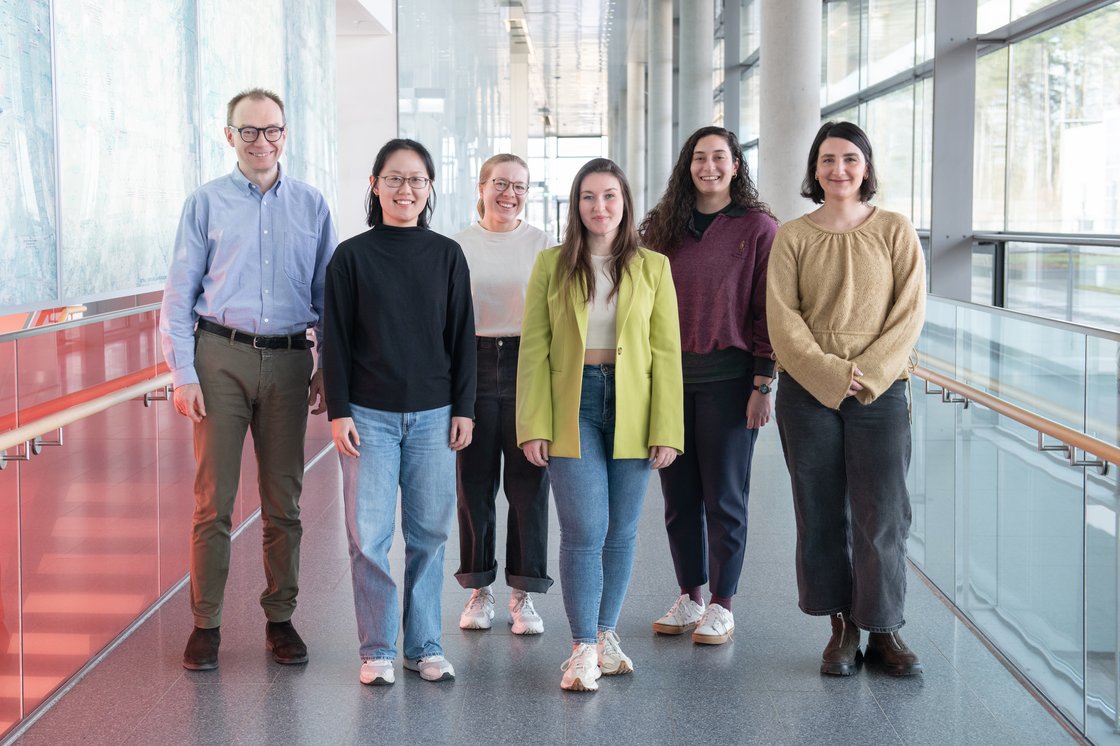
Name | Function | E-mail address |
PD Dr Marcin Lyszkiewicz | Head | marcin.lyszkiewicz (at) uni-ulm.de |
Dr Alexandra Niedermayer | Post-Doc | alexandra.niedermayer (at) uni-ulm.de |
Dilay Yilmaz | TA | dilay.yilmaz (at) uniklinik-ulm.de |
Chenge Xin | PhD student | change.xin (at) uni-ulm.de |
Almila Izbirak | PhD student | almila.izbirak (at) uni-ulm.de |
Andrea Nowottny | MD student | andrea.nowottny (at) uni-ulm.de |
Our research focuses on how the immune system cells develop and how expression of their genome is regulated.
The immune system comprises various cell types that work together to maintain our health. Their main function is to protect us from infection and cancer. To improve our understanding of these processes, we study both healthy children and those suffering from rare inborn errors of immunity (IEI). The latter results in the loss or impaired function of certain elements of the immune system. This approach permits to uncover critical regulatory mechanisms of immune function in humans.
This rare-to-common approach lies at the core of the German Center for Child and Adolescent Health (DZKJ), with which our group is affiliated.
From a molecular perspective, our group has developed strong expertise in studies of genome expression, especially on the postranscriptional level. Here, we focus on biology of non-coding (nc) RNA molecules, like micro-RNA or long ncRNAs, and RNA-binding proteins (RBPs).
PURA-mediated immune system deficiency in humans
PURA haploinsufficiency is primarily associated with neurological symptoms, clinical reports and emerging data suggest a potential role in immune system dysfunction. Observations from PURA patient foundations in Australia and Poland noted recurrent, severe lung infections and atypical fever responses in children, prompting further investigation. Preliminary analysis of blood samples from PURA patients revealed that PURA is highly expressed in lymphocytes, with overall expression reduced by half in affected individuals. This haploinsufficiency is associated with mild neutropenia and an abnormal accumulation of B cells. Spectral cytometry and stimulation assays revealed altered expression of B-cell survival and apoptotic markers—namely, reduced Fas and increased BAFFR/BCMA—indicating impaired B-cell selection and memory formation.
To understand these mechanisms, we will explore B-cell maturation, Fas signalling sensitivity, and PURA’s regulation in response to stimulation. Proteomic and transcriptomic analyses, including iCLIP, will help distinguish between transcriptional and post-transcriptional regulatory roles. In parallel, zebrafish and conditional mouse models are being developed to study PURA’s role in neutrophil and B-cell development. Finally, since PURA may regulate shared targets in the immune and nervous systems, select immune-regulatory proteins, such as Fas, will be investigated in neuronal models to explore potential therapeutic implications for PURA neurodeficiency.
This project is part of both the German Center for Child and Adolescent Health (DZKJ) and Chenge Xin's PhD programme.
Regulation of T-cell function through changes in local membrane architecture
Inborn Errors of Immunity offer a powerful means through which to study human immune biology. Mutations in a single gene can uncover critical regulatory mechanisms of immune function. In this study, we examine the consequences of deleting FCHO1, a gene that we have previously identified as a lymphocyte-specific nucleator of clathrin-mediated endocytosis. This discovery has opened up a new avenue for investigating how surface membrane remodelling influences T cell receptor (TCR) internalisation.
Since mutations in the FCHO1 locus in humans lead to a near-complete absence of lymphocytes, we have developed both murine and in vitro models to study this deficiency. These models uniquely position us to explore how the internalisation and subcellular localisation of TCR impact downstream signalling, gene expression, and lymphocyte activation.
At the very centre to understand the impact of FCHO proteins on the T cell biology lies how alteration in TCR endocytosis results in aberrant signalling and, in consequence, erroneous proteome expression. To address this question systematically, in collaboration with a group of Johannes Müller-Reif of Max Planck Institute in Munich, we employ murine models of the disease and various proteomic techniques. This gives a detailed picture of T cell receptor-associated phospho-proteome cascade, and show main alteration in translational programme.
This project is funded through an individual research grant from the DFG and is part of Almila Izbirak's PhD programme.
Post-transcriptional regulation of B cell development
Lymphocyte development involves rapid changes in the genetic program, driven by progenitor commitment and quick transitions between proliferation and somatic gene recombination. These dynamics make lymphocytes ideal models for studying post-transcriptional gene regulators, such as non-coding RNAs (ncRNAs) and RNA-binding proteins (RBPs).
A major challenge in studying these regulatory processes is that critical transitions—such as gene recombination, cell-cycle arrest, and subsequent proliferative expansion—are not always reflected phenotypically. To overcome this, we used a unique mouse model (Indu-Rag), in which B cell development is reversibly blocked just before final commitment. Upon restoration, B cell maturation proceeds in a synchronized wave.
Using Next Generation Sequencing (NGS), we generated detailed expression profiles of coding (mRNAs) and non-coding RNAs (miRNAs and lncRNAs) in these developing B cells, identifying several ncRNAs likely involved in regulating cell-cycle progression. To determine whether this regulatory network is conserved in humans, we will study the expression of selected miRNAs and their predicted targets in bone marrow samples from both healthy individuals and patients with acute lymphoblastic leukaemia (ALL).
Andrea Nowottny's MD thesis covers the section of the projects involving mice and NGS data analysis. The section focusing on studies of human B cells is being conducted in collaboration with Prof. Lüder H. Meyer and is being jointly supported by a Tour der Hoffnung grant.
For a long time, tumours were considered to be purely genetic disorders resulting from genome instability and uncontrolled cell proliferation. However, it is now well established that cancer is also an immune system disease, whereby the immune system fails to recognise and eliminate transformed cells. Malignant cells employ various strategies to evade immune system recognition; however, the process can be reversed. Indeed, checkpoint inhibitor therapy and CAR-T cell therapy represent unprecedented successes of immunology in the fight against cancer. Although successful, there are still numerous examples where we fail to mobilise the immune system to destroy cancer cells.
To gain a better understanding of how cancer cells interact with and impact the function of the immune system, we are studying two distant types of malignancy together with Prof. Mike Andrew Westhoff and Prof. Lüder H. Meyer. Here, we examine the composition and activation status of immune cells in brain tumours, where the immune system is physically separated from the brain by the blood-brain barrier, and in acute lymphoblastic leukaemia, which is a malignancy of the immune system itself. By comparing the impact of short- and long-distance interactions between malignant and immune system cells, we aim to improve our understanding of immune escape.
- Xu M, Ito-Kureha T, Kang HS, Chernev A, Raj T, Hoefig KP, Hohn C, Giesert F, Wang Y, Pan W, Ziętara N, Straub T, Feederle R, Daniel C, Adler B, König J, Feske S, Tsokos GC, Wurst W, Urlaub H, Sattler M, Kisielow J, Wulczyn FG, Łyszkiewicz M *, Heissmeyer V. * The thymocyte-specific RNA-binding protein Arpp21 provides TCR repertoire diversity by binding to the 3'-UTR and promoting Rag1 mRNA expression. Nat Commun. 2024 Mar 11;15(1):2194. doi: 10.1038/s41467-024-46371-z. *equally contributed
- Krueger A, Łyszkiewicz M, Heissmeyer V. Post-transcriptional control of T-cell development in the thymus. Immunol Lett. 2022 Jul;247:1-12. doi: 10.1016/j.imlet.2022.04.009.
- Frey L, Zietara N, Łyszkiewicz M, Marquardt B, Mizoguchi Y, Linder MI, Liu Y, Giesert F, Wurst W, Dahlhoff M, Schneider M, Wolf E, Somech R, Klein C. Mammalian VPS45 orchestrates trafficking through the endosomal system. Blood. 2021 Apr 8;137(14):1932-1944. doi: 10.1182/blood.2020006871.
- Łyszkiewicz M *, **, Ziętara N *, Frey L, Pannicke U, Liu Y, Fan Y, Puchałka P, Hollizeck S, Somekh I, Rohlfs M, Yilmaz T, Ünal E, Karakukcu M, Patiroğlu T, Keller C, Karasu E, Sykora K-W, Somech R, Roesler J, Hoenig M, Schwarz K, Klein C **. Human FCH domain only 1 (FCHO1) deficiency reveals an essential role for clathrin-mediated endocytosis for the development and function of T cells. Nat Commun 2020 Feb 25;11(1):1031. doi: 10.1038/s41467-020-14809-9. *equally contributed, **corresponding author
- Łyszkiewicz M *, Kotlarz D *, Ziętara N *, Brandes G, Diestelhorst J, Glage S, Hobeika E, Reth M, Huber L.A., Krueger A, Klein C. LAMTOR2 (p14) controls B cell differentiation by orchestrating endosomal BCR trafficking. Front Immunol 2019. doi: 10.3389/fimmu.2019.00497. . *equally contributed
- Łyszkiewicz M *, Winter S.J *, Witzlau K, Föhse L, Brownlie R, Puchałka J, Verheyden N, Kunze-Schumacher H, Imelmann E, Blume J, Raha S, Sekiya T, Yoshimura A, Frueh J, Ullrich E, Huehn J, Weiss S, Gutierrez M.G, Prinz I, Zamoyska R, Ziętara N *, Krueger A.*. miR-181a/b-1 controls thymic selection of Treg cells and tunes their suppressive capacity. PLoS Biology 2019. doi: 10.1371/journal.pbio.2006716 *equally contributed
- Blume J, Ziętara N, Witzlau K, Liu Y, Sanchez OO, Puchałka J, Winter SJ, Kunze-Schumacher H, Saran N, Düber S, Roy B, Weiss S, Klein C, Wurst W, Łyszkiewicz M *, **, Krueger A. miR-191 modulates B-cell development and targets transcription factors E2A, Foxp1, and Egr1. Eur J Immunol, 49: 121–132 (2019). doi: 10.1002/eji.201847660. *equally contributed, **corresponding author
- Krueger A., Ziętara N., Łyszkiewicz M. T cell development by the numbers. Trends Immunol. Feb;38(2):128-139 (2017). doi: 10.1016/j.it.2016.10.007.
- Blume J, ZurLage S, Witzlau K, Georgiev H, Weiss S, Łyszkiewicz M *, Ziętara N *, Krueger A. * Overexpression of Vα14Jα18 TCR promotes development of iNKT cells in the absence of miR-181a/b-1.Immunol Cell Biol. Sep;94(8):741-6 (2016). doi: 10.1038/icb.2016.40. *equally contributed
- Ziętara N *, Łyszkiewicz M *, Puchalka J, Witzlau K, Förster R, Pabst O, Prinz I, Krueger A. Quantification of the adult thymus progenitor niches. J Exp Med. Sep 21;212(10):1589-601 (2015). doi: 10.1371/journal.pone.0145010. equally contributed
- Łyszkiewicz M, Ziętara N, Föhse L, Puchałka J, Diestelhorst J, Witzlau K, Prinz I, Schambach A, Krueger A. Niche availability promotes intrathymic dendritic-cell development from Early T lineage Progenitors. Blood, 125(3):457-64 (2015). doi: 10.1182/blood-2014-07-592667.
- Ziętara N *, Łyszkiewicz M *, Witzlau K, Naumann R, Hurwitz R, Langemeier J, Bohne J, Sandrock I, Ballmaier M, Weiss S, Prinz I, Krueger A. Critical role for miR-181a/b-1 in agonist selection of invariant NKT cells. Proc Natl Acad Sci U S A, 110(18):7407-12 (2013). doi: 10.1073/pnas.1221984110. *equally contributed
- Ziętara N *, Łyszkiewicz M *, Puchalka J, Pei G, Gutierrez MG, Lienenklaus S, Hobeika E, Reth M, Martins Dos Santos VA, Krueger A, Weiss S. Immunoglobulins drive terminal maturation of splenic dendritic cells.Proc Natl Acad Sci U S A110(6):2282-7 (2013). doi: 10.1073/pnas.1210654110. *equally contributed
- Saran N, Łyszkiewicz M, Pommerencke J, Witzlau K, Vakilzadeh R, Ballmaier M, von Boehmer H, Krueger A. Multiple extrathymic precursors contribute to T-cell development with different kinetics.Blood115(6), 1137-44 (2010). doi: 10.1182/blood-2009-07-230821